
What Is the Primary Objective of the CRM Process? 7 Benefits
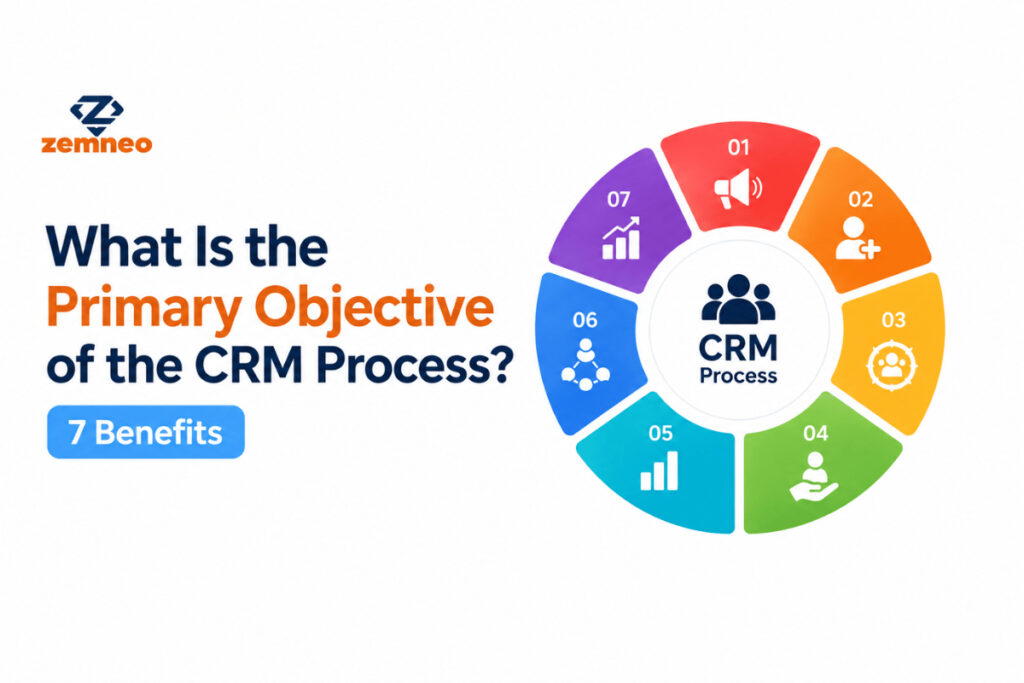
What is the primary objective of the CRM process? At its core, the goal is to build and maintain strong, long-term customer relationships while helping a business manage customer interactions more effectively.
A CRM process brings customer information, sales activities, conversations, follow-ups and business actions into a structured system. Instead of relying on spreadsheets, personal notes or scattered conversations, teams can see what has happened with a customer and what needs to happen next.
The result is not simply better data storage. A well-designed CRM process helps businesses retain customers, improve sales, respond faster, reduce missed follow-ups and make better decisions from customer information.
In this guide, we will explain the primary objective of the CRM process and seven important benefits that support it.
What Is the Primary Objective of the CRM Process?
The primary objective of the CRM process is to create and maintain valuable customer relationships throughout the customer lifecycle.
That means a business should be able to understand:
- Who the customer or prospect is
- How they first contacted the business
- What products or services they are interested in
- Which conversations have already taken place
- What stage of the buying process they are in
- Who is responsible for the next action
- When the next follow-up should happen
- What happened after the sale
This customer context allows teams to provide more consistent experiences instead of treating every interaction as a new conversation.
CRM therefore connects customer relationships with business outcomes. Better customer information can support better follow-ups, stronger sales processes, improved retention and more informed decisions.
IBM similarly describes CRM as a way to document, track and manage relationships and interactions with existing and potential customers.
Why Is the CRM Process Important for a Business?
Customer relationships involve many individual interactions. A prospect may submit a form, receive a call, ask a question on WhatsApp, request a quotation and then need several follow-ups before making a purchase.
Without a defined process, these activities can become disconnected.
For example, imagine a business receives 100 enquiries in a month. If the team manages those enquiries through different spreadsheets, inboxes and personal reminders, it becomes difficult to know:
- Which leads have been contacted?
- Which leads need another follow-up?
- Which opportunities are close to conversion?
- Which customers have not received a response?
- Which sales representative owns each opportunity?
A CRM process creates a common structure for this work.
ZemNeo Lead Management can help businesses organize lead information and keep customer-related activities connected instead of relying on scattered tracking methods.
The primary objective of CRM is to create a consistent way to understand, manage, and improve customer relationships throughout the customer lifecycle. For a broader explanation of CRM and its business applications, see IBM’s CRM overview.
7 Key Benefits of the CRM Process
1. Build Stronger Customer Relationships
The first and most important benefit is better relationship management.
When customer information and previous interactions are available to the team, employees can understand the customer’s history before starting the next conversation.
For example, if a customer previously asked about a particular product, the salesperson does not need to ask the same basic questions again. They can continue the conversation based on existing information.
This creates a smoother experience and helps the customer feel understood.
ZemNeo Tip: Use contact and account records to keep customer information accessible to the people responsible for managing the relationship.
2. Improve Customer Retention and Loyalty
Acquiring a new customer usually requires more effort than maintaining an existing relationship. A structured CRM process helps businesses stay connected after the initial sale.
Teams can schedule follow-ups, remember important customer interactions and identify customers who may need additional attention.
For example, a service business might schedule a follow-up after 30 days, while a B2B company might remind a salesperson to contact a customer before a renewal period.
Consistent communication can help prevent customers from becoming inactive simply because the business forgot to follow up.
3. Increase Sales and Conversion Opportunities
A CRM process also supports the movement from lead to customer.
Instead of keeping every enquiry in one large list, businesses can organize opportunities according to their current stage.
| CRM Stage | Typical Business Action |
|---|---|
| New Lead | Review enquiry and assign owner |
| Contacted | Start conversation and understand requirements |
| Qualified | Confirm need, budget or buying intent |
| Opportunity | Prepare proposal or quotation |
| Negotiation | Handle objections and finalize terms |
| Won | Complete sale and begin customer follow-up |
| Lost | Record reason and identify future opportunities |
This makes it easier for sales teams to understand where their opportunities stand and which deals require attention.
ZemNeo Opportunity Management is particularly relevant here because opportunity tracking helps businesses organize sales activity around the progression of each opportunity.
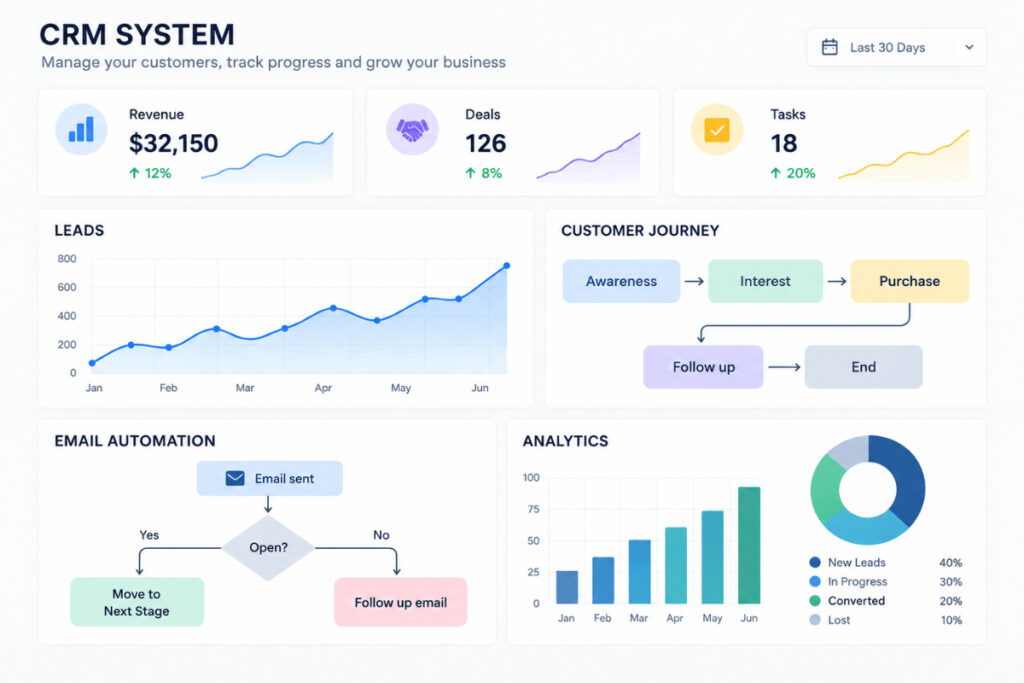
4. Make Customer Data Easier to Use
Customer information often comes from multiple sources.
A business may receive information through website forms, phone calls, WhatsApp conversations, social media, advertisements and direct enquiries.
When this information remains separated, employees may not have the complete picture.
A CRM process brings important customer information into a structured environment so teams can work with a more complete view.
This is also one reason CRM is more than a digital address book. The objective is to make customer information useful for action, not simply to store it.
6
Image placement: Place this image immediately after the section “4. Make Customer Data Easier to Use.”
Image alt text: what is the primary objective of the CRM process centralized customer data
5. Reduce Missed Follow-Ups
One of the most practical objectives of CRM is making sure important customer actions do not depend entirely on memory.
A salesperson may remember to call a hot lead today but forget about another enquiry that needs a follow-up next week. As the number of customers increases, this becomes harder to manage manually.
A CRM process can provide reminders and structured tasks so that follow-up becomes part of the workflow.
For example:
A business receives a ₹50,000 product enquiry on Monday. The salesperson sends the quotation on Tuesday and schedules a follow-up for Friday. Instead of keeping the reminder in a personal notebook, the CRM records the next action against the opportunity.
This small change can make customer follow-up much more consistent.
ZemNeo Automation can be useful when a business wants to automate reminders, lead assignment and other repetitive customer-related activities.
6. Improve Team Productivity and Coordination
CRM processes also help teams work from the same information.
Without a shared system, one employee may have important customer information in email while another has it in a spreadsheet. This creates unnecessary dependency on individuals.
With a centralized CRM, teams can understand:
- Who owns a lead
- What action was taken
- What the current opportunity stage is
- Which task is pending
- What the customer discussed previously
- What needs to happen next
This reduces the amount of time employees spend searching for information or asking colleagues for updates.
Zendesk similarly highlights centralized customer information, pipeline visibility and workflow automation as important capabilities of CRM systems.
7. Support Better Business Decisions
The CRM process creates a record of customer and sales activity that can be analyzed over time.
Managers can use this information to understand questions such as:
- Which sources generate the most leads?
- Which sales stages lose the most opportunities?
- How quickly does the team respond to enquiries?
- Which products generate the most opportunities?
- How many leads convert into customers?
- Which representatives need support?
- How much revenue is coming from existing customers?
This turns CRM data into a management tool rather than simply a database.
ZemNeo Reports & Dashboards can help businesses turn CRM activity into reports and dashboards for easier performance analysis.
CRM Process vs CRM Software: Are They the Same?
No. A CRM process and CRM software are related, but they are not the same thing.
A CRM process is the way a business manages customer relationships and customer-related activities.
CRM software is the technology used to support that process.
| CRM Process | CRM Software |
|---|---|
| Defines how leads are handled | Records and manages leads |
| Establishes follow-up procedures | Creates tasks and reminders |
| Defines sales stages | Tracks opportunities |
| Determines customer information to capture | Stores customer records |
| Sets performance goals | Provides reports and dashboards |
| Defines team responsibilities | Supports ownership and access controls |
This distinction matters because simply purchasing CRM software does not automatically create a good CRM process.
The business still needs clear stages, responsibilities, follow-up rules and measurable goals.
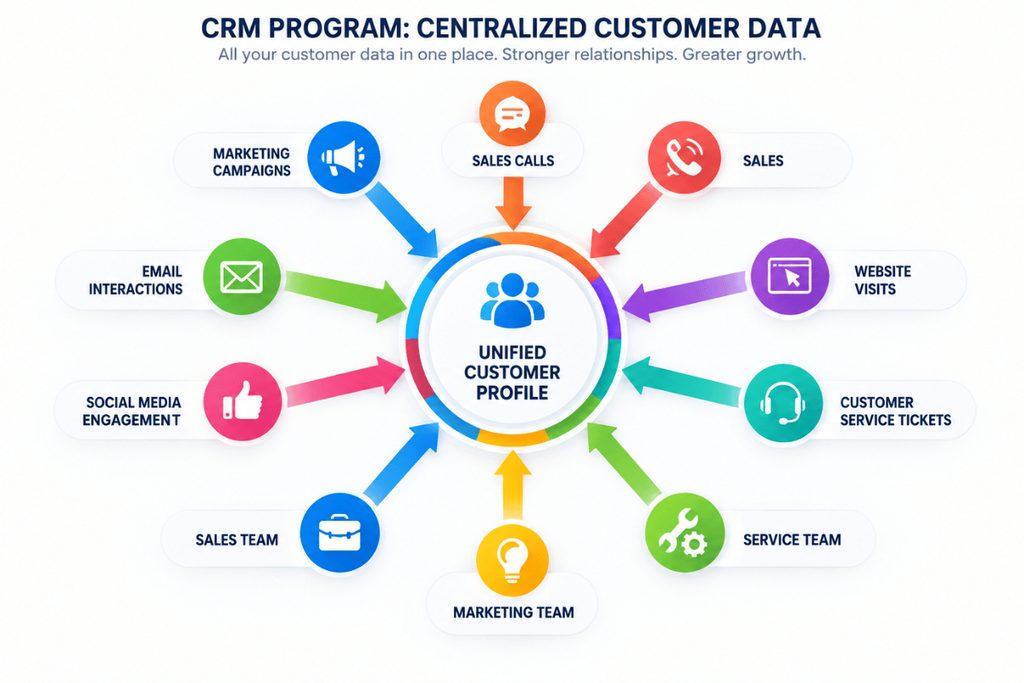
How the CRM Process Supports the Customer Journey
The primary objective of the CRM process becomes easier to understand when you look at the entire customer journey.
A typical process may look like this:
Lead → Qualification → Conversation → Opportunity → Sale → Follow-Up → Retention
At every stage, the business collects useful information and takes an action.
For example:
- A prospect submits an online enquiry.
- The lead is captured in the CRM.
- The lead is assigned to a salesperson.
- The salesperson contacts the prospect.
- The requirement is recorded.
- The opportunity moves through the appropriate sales stage.
- A quotation is sent.
- Follow-up tasks are scheduled.
- The sale is completed.
- Post-sale communication continues.
The objective is to maintain continuity throughout this journey.
How to Measure Whether Your CRM Process Is Working
A CRM objective should be measurable. Otherwise, it becomes difficult to determine whether the process is actually improving the business.
Useful CRM KPIs include:
| KPI | What It Helps Measure |
|---|---|
| Lead response time | How quickly enquiries receive attention |
| Lead-to-customer conversion rate | How effectively leads become customers |
| Follow-up completion rate | Whether planned follow-ups are being completed |
| Sales cycle length | How quickly opportunities move to closure |
| Win rate | Percentage of opportunities converted |
| Customer retention rate | How effectively customers are retained |
| Revenue per customer | Customer value and revenue contribution |
For example, suppose a business receives 200 leads per month and converts 20 into customers.
Its conversion rate is:
20 ÷ 200 × 100 = 10%
If better follow-up increases conversions to 26 customers, the conversion rate becomes:
26 ÷ 200 × 100 = 13%
That is a meaningful improvement that can be measured through the CRM process.
How to Create a CRM Process That Actually Works
The best CRM process does not need to be complicated. It needs to be clear enough for the team to follow consistently.
Start with these steps:
Define Your Customer Lifecycle
Decide how a lead moves from first contact to customer and then to repeat business.
Establish Clear Ownership
Every lead, opportunity or customer should have a clear owner where appropriate.
Standardize Important Information
Decide which customer details and sales information the team needs to record.
Create Follow-Up Rules
Define when and how follow-ups should happen after calls, enquiries, quotations or other important interactions.
Automate Repetitive Activities
Use automation for tasks such as reminders, lead assignment and routine communication where it makes sense.
Measure the Process
Choose a small set of KPIs and review them regularly rather than collecting dozens of metrics that nobody uses.
Keep the CRM Simple
Too many fields, complicated workflows and unnecessary stages can reduce adoption. The CRM should make customer management easier, not create additional administrative work.
What Happens When a Business Does Not Have a Clear CRM Process?
Without a structured CRM process, businesses often experience the same problems repeatedly.
Leads can remain unattended. Follow-ups can happen late. Customer information can become fragmented. Sales managers may struggle to understand pipeline status, and customers may have to repeat information that was already provided to another employee.
The problem usually becomes more visible as the business grows.
A process that works for 20 customers may become difficult to manage when the business has hundreds or thousands of customer interactions.
That is why CRM process design should focus on repeatability, visibility and accountability rather than simply adding more software.
Frequently Asked Questions
What is the primary objective of the CRM process?
The primary objective of the CRM process is to build and maintain strong, long-term customer relationships while organizing customer information, interactions, sales activities and follow-ups. The process helps businesses provide more consistent customer experiences while supporting sales, retention and growth.
What are the main objectives of CRM?
The main objectives include improving customer relationships, increasing retention, organizing customer information, improving sales conversion, reducing missed follow-ups, increasing team productivity and supporting better business decisions.
What is the primary purpose of a CRM tool?
The primary purpose of a CRM tool is to help businesses organize and manage customer-related information and activities in one structured system. It supports tasks such as lead management, contact management, opportunity tracking, follow-ups, reporting and automation.
What are the 5 steps in the CRM process?
A simple CRM process can be viewed as five stages: identify customers or leads, capture and organize information, engage and follow up, convert or retain customers, and analyze performance. Businesses may use more detailed stages depending on their sales model.
Why is customer retention an important CRM objective?
Customer retention matters because existing customers can continue generating revenue and may become repeat buyers or advocates. A CRM process helps businesses maintain customer history, schedule follow-ups and identify opportunities to keep relationships active.
How does CRM improve sales?
CRM improves sales by giving teams better visibility into leads and opportunities, organizing sales stages, assigning ownership and supporting timely follow-ups. It also gives managers data they can use to identify bottlenecks and improve the sales process.
Final Thoughts
So, what is the primary objective of the CRM process?
The answer goes beyond simply storing customer information.
The primary objective is to build and maintain valuable customer relationships by creating a consistent, organized and measurable way to manage customer interactions throughout the customer lifecycle.
The seven supporting benefits—stronger relationships, better retention, higher conversions, organized data, consistent follow-ups, improved productivity and better decisions—work together to support that central goal.
For growing businesses, the real value of CRM comes when the system becomes part of everyday work rather than just another database.
If your team is still managing leads, follow-ups and customer information across spreadsheets, messages and separate tools, it may be time to bring those activities into one structured CRM process.
Ready to see how a CRM process can work for your business? Book a Free Demo with ZemNeo and explore a CRM built around lead management, follow-ups, automation and sales visibility.
